Are Food Dehydrators Worth It for Homemade Jerky?
A food dehydrator is worth it for homemade jerky if you plan to make batches regularly and want controlled, repeatable drying. For occasional small batches, an oven may be enough; weigh the space and cleanup against how often you'll use the machine.
On this page (9 sections)
- Are food dehydrators worth it for jerky you make at home?
- What does a dehydrator make easier?
- What does a dehydrator not solve?
- Is a dehydrator cheaper than using an oven?
- Which features matter for homemade jerky?
- Which dehydrator fits your routine?
- How do you decide if it's worth buying?
- What should you check before your first batch?
- Are food dehydrators worth it for homemade jerky?
A food dehydrator is worth it for homemade jerky if you make batches regularly and want a dedicated space with adjustable heat and a timer. If you make jerky only once or twice a year, an oven may be enough.
The decision comes down to your batch size, kitchen space, cleanup tolerance and how often you'll use the machine. Start with dehydrators for beef jerky to compare common machine styles and features.
Are food dehydrators worth it for jerky you make at home?
A dehydrator is worth considering when regular batches justify the counter space and cleanup. Its trays hold food in a dedicated drying chamber, and many models offer adjustable temperature controls and a timer.
That setup can make repeat batches easier to manage than arranging strips on oven racks. The machine still needs time to run, and you need to check that its temperature and capacity suit your process.
| Your habit | A dehydrator may fit if… | Think twice if… |
|---|---|---|
| You make jerky often | You want a dedicated machine ready for another batch | You don't have a clear place to use or store it |
| You make large batches | Several trays match the amount of meat you prepare | The machine's capacity is larger than your usual batch |
| You make it occasionally | You expect to use it for fruit, herbs or other foods too | You only need it for one small batch |
| You're learning | Controls and a timer help you manage a drying run | You haven't checked food safety steps or drying guidance |
These are practical decision points, not a promise that one machine will make better jerky. Your results still depend on meat preparation, strip thickness, temperature and drying time.
What does a dehydrator make easier?
A dehydrator makes tray-based drying and temperature control part of one appliance. That can be useful when you want to repeat a process without tying up an oven for a long run.
Capacity matters if you prepare meat in larger batches. A 7-tray machine, a compact 5-tray model and a larger 6-tray cabinet offer different footprints and tray counts, so compare the layout with the amount you actually plan to dry.
Timer length and temperature range are worth checking before you buy. The Magic Mill Pro offers a 95–176°F range and a timer up to 48 hours, while the Excalibur Select Series offers 85–165°F and up to 60 hours.
A dehydrator can also dry foods beyond jerky. If you expect to make fruit leather, herbs or dried produce, those other uses may help justify storing a dedicated appliance.
What does a dehydrator not solve?
A dehydrator doesn't remove the need to follow a safe meat preparation process. Drying meat is not a substitute for food safety guidance, and a temperature display alone doesn't confirm that your jerky is safe.
Choose a trusted process and follow it consistently. Our guide to what temperature to dehydrate jerky explains why temperature matters, and how to tell when jerky is done covers signs to check during drying.
A dehydrator also takes up space and needs cleaning. Count the trays, interior surfaces and accessories you'll wash, and decide where the machine will live between batches.
Is a dehydrator cheaper than using an oven?
A dehydrator isn't automatically cheaper to run than an oven. Energy cost depends on wattage, run time and your local electricity rate, so compare those numbers for the appliance you plan to use.
Use this formula:
kilowatts × hours used × electricity rate per kilowatt-hour = estimated cost
For example, a 600-watt dehydrator uses 0.6 kilowatts while running at full power. Multiply that by the hours in the cycle and your rate to estimate the energy cost; actual use can vary.
Our guide to how much electricity a dehydrator uses walks through the calculation. Also consider the value of your time, oven availability and whether you'll use the dehydrator for other foods.
Which features matter for homemade jerky?
The most useful features are a suitable temperature range, enough tray space and controls that match your routine. A timer can help you set a long drying run, while airflow design affects how air moves across the trays.
What temperature range should a jerky dehydrator have?
Choose a temperature range that supports the food safety method you plan to follow. The Cosori reaches 176°F, while the Excalibur Select Series reaches 165°F; those ranges alone don't replace a safe preparation process.
For a broader explanation, see what temperature to dehydrate jerky. Check the full method before deciding that a machine's maximum setting is enough for your needs.
How much tray space do you need?
Choose capacity based on your typical batch, not the largest batch you might make someday. More trays can fit more food, but they also take up more room in your kitchen or storage area.
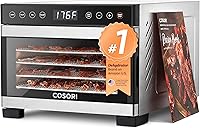
The Cosori has 5 stainless steel trays and 3.1 sq ft of drying space. The Magic Mill has 7 full-size stainless steel trays, while the Excalibur has 6 chrome trays and 9.6 sq ft of drying space.
Do rear fans and timers matter?
A rear fan can move air across trays, and a timer gives you a way to set a run length. The Magic Mill and Cosori both describe rear-fan airflow; each has a 48-hour timer.
The Excalibur describes horizontal airflow and a timer up to 60 hours. These features may make a machine easier to fit into your routine, but they don't guarantee a particular drying time or result.
Which dehydrator fits your routine?
Choose the model that matches your batch size, counter space and preferred controls. These three options differ in tray count, drying area and temperature range.
Cosori's 5-tray model measures 13.9 x 11.3 x 8.9 in. Its temperature range is 95–176°F, and it includes a mesh screen and fruit roll sheet.
The Magic Mill Pro measures 15.5 x 11.3 x 10.8 in. Its temperature control adjusts from 95–176°F in 1-degree steps, and it includes 2 mesh screens and a fruit roll tray.
The Excalibur Select Series has a temperature range of 85–165°F and a timer up to 60 hours. Its glass French doors let you monitor drying without opening the cabinet.
For more choices, compare the best dehydrators for beef jerky. If you're still deciding whether you need a dedicated appliance, read whether you can make beef jerky without a dehydrator.
How do you decide if it's worth buying?
A dehydrator is worth buying when your expected use matches the machine's capacity and your kitchen has room for it. If you're unsure, write down how many batches you expect to make in a year and what else you'd dry.
Choose a smaller machine if you usually prepare a few trays and need to store it away. Consider more tray space if you regularly make larger batches, but check the outside dimensions first.
If you plan only an occasional batch and already have an oven that can support your process, you may not need a separate appliance. If you expect to make jerky often or dry several kinds of food, a dehydrator can earn its space.
What should you check before your first batch?
Before drying meat, choose a safe recipe and follow its preparation steps, including the required heating guidance. Read the appliance instructions, check how to load its trays, and avoid relying on appearance alone to judge safety.
Use consistent strip thickness to help the pieces dry at a similar pace. Our guide to how thick to cut jerky strips explains why even pieces make the process easier to manage.
Are food dehydrators worth it for homemade jerky?
Food dehydrators are worth it for regular jerky makers who want dedicated trays, adjustable heat and a timer. For rare small batches, an oven may be enough if it suits your chosen safe process.
Pick a compact model for smaller batches and limited space, or a larger tray layout for repeated batch drying. If you're comparing models, start with our best dehydrators for beef jerky guide.
Frequently asked questions
Are food dehydrators worth it for making jerky?
A food dehydrator can be worth it if you make jerky often enough to use its trays, timer and adjustable temperature controls. It gives you a dedicated drying space, but still takes counter or storage room and needs cleanup after each batch.
For rare batches, compare that commitment with using an oven.
Can I make beef jerky without a dehydrator?
Yes, you can make beef jerky in an oven if it can hold a suitable low temperature and provide airflow. Follow a food safety method for meat, and check your oven's actual temperature rather than assuming its dial is exact.
A dehydrator is a dedicated alternative with trays and a timer.
How much electricity does a food dehydrator use?
Electricity use depends on the dehydrator's wattage, drying time and your electricity rate. Multiply the machine's kilowatts by the hours it runs, then by your rate per kilowatt-hour.
Compare the result with how often you make a batch; a long cycle can matter more than a short one.
What should I look for in a jerky dehydrator?
Look for a temperature range suited to your chosen food safety process, enough tray space for your usual batch, and controls that are easy to set. A timer and airflow design can make long drying runs easier to manage.
Also check the machine's size and how you'll clean and store it.