Dehydrators for Beef Jerky: A Plain-English Guide
A good dehydrator for beef jerky has adjustable temperature control, enough tray space for your batch and airflow that dries strips evenly. Choose the tray style and capacity that fit your kitchen and routine.
On this page (9 sections)
- What makes a dehydrator suitable for beef jerky?
- Should you choose a cabinet or stackable dehydrator?
- Which dehydrator for beef jerky fits your batch?
- How much tray space do you need?
- What temperature controls should a jerky dehydrator have?
- How does airflow affect jerky drying?
- How long does beef jerky take in a dehydrator?
- What else should you consider before buying?
- Which dehydrator for beef jerky should you choose?
A dehydrator for beef jerky should have adjustable temperature control, enough tray space for your batch and airflow suited to its tray design. Match those basics to how often you make jerky, how much counter space you have and how you plan to store the machine.
For occasional small batches, a compact dehydrator may be enough. Larger batches call for more drying area, but a bigger machine also needs more room to sit and store.
The four options below range from a 6-tray cabinet to a round machine that can expand. For more focused comparisons, start with our jerky dehydrator picks.
What makes a dehydrator suitable for beef jerky?
A dehydrator for beef jerky needs temperature control, usable tray space and airflow that suits the way you load it. These features help you dry a batch without crowding strips or buying more capacity than you need.
Jerky is thin meat, so the strips should have room around them for air to move. A tray count by itself doesn't tell you how much usable drying surface a machine has or how easy it will be to load.
Look for controls that let you follow the temperature guidance for your recipe. A wide temperature range is useful only if it includes the settings your chosen process requires.
Drying meat also calls for care with food safety. A dehydrator is one part of the process, so follow a tested recipe and current food safety guidance rather than treating any appliance setting as a guarantee.
Should you choose a cabinet or stackable dehydrator?
Choose a cabinet dehydrator for flat trays and a stackable model if you prefer a round design that can expand. Your batch size, available space and preferred way of handling trays should guide the choice.
Cabinet models typically let you slide trays in and out. Rear-mounted fans send air across the trays, and some designs are built to dry without tray rotation, according to their makers.
A stackable dehydrator uses round trays that sit one above another. Some can add more trays, which can suit changing batch sizes, though you should check how the maker says to load and use them.
Measure the machine's footprint and height before buying. A unit that fits your largest batch may still be awkward if it crowds the counter or has nowhere to go between uses.
Which dehydrator for beef jerky fits your batch?
The right dehydrator for beef jerky depends on how much you dry at once and which tray style fits your routine. These four choices cover a 6-tray cabinet, two larger 10-tray cabinets and an expandable round model.
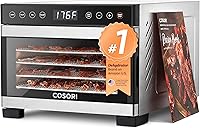
Cosori 6-Tray Stainless Steel Dehydrator
The Cosori suits home cooks who want a cabinet design with 6 stainless steel trays and 6.5 sq ft of drying space. Its temperature control runs from 95°F to 165°F, and the timer can be set for up to 48 hours.
Cosori lists a 600 W motor, rear-mounted fan and horizontal airflow. The trays are dishwasher-safe, and the machine includes a mesh screen and fruit roll sheet.
Choose it if its six trays match the amount of jerky you usually make. Compare the machine's dimensions with your available counter and storage space before settling on it.
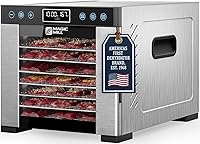
Magic Mill Pro 10-Tray Dehydrator
The Magic Mill suits cooks who want 10 stainless steel trays for larger batches. Its temperature range is 95°F to 176°F, and the digital timer has automatic shutoff when time runs out.
Magic Mill describes the dehydrator as using a rear-mounted fan and airflow circulation to dry evenly without tray rotation. A transparent door window lets you view the drying process, and the trays and liners are dishwasher-safe.
Choose it if you often fill several trays and want a cabinet-style machine. Its footprint and height are worth measuring against your counter and cupboard space.
Excalibur Performance Series 10-Tray
The Excalibur suits buyers who want 10 stainless steel trays and 16 sq ft of drying space. Its adjustable temperature control runs from 85°F to 165°F, and the digital timer can run for up to 80 hours.
Excalibur says its Hyperwave Pulse Technology and Horizontal Parallex Air Flow dry food without tray rotation. The unit also has an LED control panel and a glass door with a top-view window.
Choose it if you want a large cabinet with space to monitor drying through the door. Its larger dimensions and 26.9 lb weight make it especially important to plan where it will sit and where you'll store it.
Nesco FD-79 Snackmaster Pro Digital
The Nesco suits cooks who want a round dehydrator that starts with 4 trays and can expand to 12. It has digital temperature control from 90°F to 160°F and 600 W of drying power.
Nesco says its Converga-Flow system moves heated air across each tray without rotation. The machine comes with two fruit roll sheets, two clean-a-screens, jerky seasoning and cure, and an instruction and recipe book.
Choose it if you like a compact round design and may want to expand later. Additional trays are sold separately, so factor that into your plans if you expect to use all 12.
How much tray space do you need?
Choose enough drying area for your usual batch, with room to lay strips without crowding them. Extra trays can help with a large batch, but they take more room in your kitchen and storage area.
For occasional jerky, a smaller cabinet or a four-tray stackable machine may be manageable. If you regularly process larger amounts of beef or game, compare total drying space and tray count, then consider how often you'll need to run another batch.
Tray count and drying area are different measures. The Cosori lists 6.5 sq ft of drying space, while the Excalibur lists 16 sq ft; the Magic Mill and Nesco product details give tray counts but no total drying area.
Make sure you can spread the strips in a single layer with space between them. Crowding may slow drying, so capacity only helps when you can load the trays properly.
What temperature controls should a jerky dehydrator have?
A dehydrator should offer temperature settings that match the safe recipe you're following. Compare the control range with the instructions for your recipe and machine, rather than choosing solely by the highest number.
The four options have different published ranges. The Cosori spans 95°F to 165°F, the Magic Mill 95°F to 176°F, the Excalibur 85°F to 165°F and the Nesco 90°F to 160°F.
Those ranges don't tell you which setting makes every jerky recipe safe. Meat handling, preparation and the full drying process matter too.
Use a reliable food safety source and follow the recipe steps carefully.
For a closer look at the role of temperature, see what temperature to dehydrate jerky. If you are still choosing a cut, our guide to the best cut of meat for jerky explains common options.
How does airflow affect jerky drying?
Airflow moves warm air around the strips, and the tray layout affects how that air reaches the food. Follow the machine's loading directions and check pieces as they dry, since airflow alone can't make every strip finish at the same time.
Cabinet models in this guide use rear-mounted fans or horizontal airflow. The Magic Mill and Excalibur describe drying without tray rotation, while the Cosori describes horizontal airflow.
The Nesco is a round stackable design with a top-mounted fan and a Converga-Flow system. Nesco says its system sends heated air across each tray and eliminates the need to rotate trays.
Don't assume two machines dry the same way just because they have the same number of trays. Slice meat to an even thickness and leave space around pieces so air can move through the load.
How long does beef jerky take in a dehydrator?
Beef jerky's drying time varies with strip thickness, the meat, the recipe and the dehydrator. A built-in timer can help you manage a session, but it doesn't replace checking the strips for doneness.
Thin, even strips are easier to compare as they dry. If pieces vary widely in thickness, some may finish sooner than others, even in the same batch.
Use a recipe's time range as a guide, then check the meat according to its instructions. Our guide to how long to dehydrate beef jerky covers the factors that affect drying time, and how to tell when jerky is done explains what to check.
What else should you consider before buying?
Compare cleaning, noise, timer features and storage needs after you have narrowed down capacity and temperature control. These details can make a dehydrator easier to fit into your routine.
The Cosori and Magic Mill have dishwasher-safe trays. The Cosori's controls include a timer of up to 48 hours; the Magic Mill has automatic shutoff when its timer ends and a keep-warm function.
The Excalibur offers an 80-hour timer and a top-view window. The Nesco's timer runs for up to 24 hours, and its trays can expand to 12 with additional trays sold separately.
Think about what else you'll dry. If you plan to use the machine for fruit or vegetables too, removable trays and included accessories may matter more than features aimed only at jerky.
Which dehydrator for beef jerky should you choose?
Pick a 6-tray cabinet for regular home batches, a 10-tray cabinet for larger loads, or an expandable round dehydrator if you want to add trays later. Check the temperature range against your recipe, then measure the machine's footprint and storage space.
For a broad comparison of options, see our best dehydrators for beef jerky at home. If your next step is making a batch, use the jerky-making basics guide to plan the process.
Frequently asked questions
What temperature should a dehydrator be for beef jerky?
Use a temperature that follows a safe jerky process and the dehydrator's instructions. A machine's temperature range alone does not make a recipe safe, and strips can dry at different rates.
Check our guide to what temperature to dehydrate jerky for food safety context.
Is a horizontal or vertical airflow dehydrator better for jerky?
Both airflow layouts can dry jerky; compare the machine's tray arrangement, capacity and instructions. Horizontal airflow sends air across trays from the back, while some round stackable models direct air through the stack.
Follow the maker's loading advice and check strips as they dry.
How many trays do I need for beef jerky?
Choose tray capacity based on how much meat you plan to dry at once and the space between strips needed for airflow. A larger tray count can help with bigger batches, but it also takes more counter and storage space.
For a small household, a compact machine may be easier to manage.
Can I make beef jerky in a cheap food dehydrator?
A lower-cost dehydrator can make jerky if it has suitable temperature control, enough room for your batch and instructions that support drying meat safely. Compare controls and capacity before buying.
Our guide to whether you need a dehydrator to make beef jerky explains other options.
How long does beef jerky take in a dehydrator?
Drying time varies with strip thickness, meat, marinade and the machine's airflow, so use a recipe range as a starting point and check for doneness. Don't rely on the timer alone.
See how long to dehydrate beef jerky for the factors that change the timing.