Food Dehydrator for Beginners: What to Buy First
A good first food dehydrator is one that fits your usual batch size, kitchen space and foods. Start with a simple tray setup for occasional snacks, or choose a larger digital model if you plan to dry meat and produce often.
On this page (10 sections)
- What should a beginner buy first?
- Which features matter most for a first food dehydrator?
- Is a stackable or shelf-style dehydrator easier to start with?
- How much capacity do you need as a beginner?
- What temperature controls do beginners need?
- Which first dehydrator fits your plans?
- What else do you need to make jerky?
- Should beginners choose a dehydrator specifically for jerky?
- How do you pick your first food dehydrator?
- Can you put fruit and meat in the same dehydrator?
A food dehydrator for beginners should match what you plan to dry, how much you make and where you will store it. For occasional snacks, start with a manageable tray count; for regular jerky or larger batches, look for more drying space and useful temperature controls.
You do not need every accessory or the largest machine to get started. Choose a model you can set up, clean and use for the foods you already want to preserve.
What should a beginner buy first?
Start with a dehydrator that has enough tray space for one normal batch and controls suited to your recipes. A digital timer and adjustable temperature can make the process easier to follow, but they do not replace a sound recipe or safe food handling.
Before comparing models, write down the foods you expect to dry during the next few months. Jerky needs different preparation and temperature guidance than fruit slices or herbs, so your intended use should shape the choice.
Also measure your counter and storage space. Some dehydrators are compact and stack trays vertically, while others use a wider cabinet with trays that slide in and out.
Which features matter most for a first food dehydrator?
Prioritize tray access, temperature range, batch capacity and cleanup. These affect the work you do each time more than a long list of extras.
| Feature | Why it matters to a beginner |
|---|---|
| Tray style | Stackable trays use vertical space; slide-in trays make it easier to see and handle each level |
| Temperature control | Lets you follow recipes that call for different drying temperatures |
| Timer | Helps you track long drying sessions and may shut the unit off when the cycle ends |
| Tray capacity | Sets how much food you can spread out in one batch |
| Accessories | Mesh screens and fruit roll sheets can help with small foods and purees |
| Cleaning | Removable trays are easier to wash than fixed surfaces |
More trays can mean fewer separate batches, but only if you have enough room to use the appliance. A large dehydrator can be awkward for someone who mostly wants a few apple slices or small herb batches.
Is a stackable or shelf-style dehydrator easier to start with?
A stackable dehydrator is often simple to store and expand, while shelf-style models give you trays that slide out individually. The best layout depends on your counter space and whether you expect to check or rearrange food during a batch.
The Nesco FD-79 starts with 4 round trays and can expand to 12, with additional trays sold separately. Its listed temperature control range is 90°F to 160°F, and it includes fruit roll sheets, clean-a-screens and a recipe and instruction book.
A cabinet style with slide-in trays may be easier to access when you are drying different foods. The Cosori has 6 stainless steel trays and 6.5 sq ft of drying space, with a digital control panel, timer up to 48 hours and temperature settings from 95°F to 165°F.
For a deeper look at the trade-offs between appliance layouts and features, read our dehydrators for beef jerky guide.
How much capacity do you need as a beginner?
Choose capacity based on your largest likely batch, not the amount you might someday make. Four to 6 trays may be enough for trying a few recipes, while 7 trays or expandable capacity can suit more frequent drying.
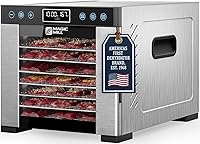
The Magic Mill Pro has 7 stainless steel trays, a rear fan, digital temperature control from 95°F to 176°F and a timer up to 48 hours. It also includes mesh screens and a fruit roll or drip tray.
For a smaller setup, the Magic Mill 5-Tray Stainless Dehydrator has 5 stackable stainless steel trays, adjustable tray height and digital temperature and timer controls. Its listed power is 240 watts, so compare its stated range and your recipes before choosing it for meat.
A roomy model is useful only when you can spread food in a single layer and have somewhere to keep the machine. If you are still learning, choose a capacity that feels practical to load and clean.
What temperature controls do beginners need?
Look for a temperature range that covers the instructions for the foods you plan to make. Read the recipe and dehydrator manual together, especially for jerky, where food safety guidance matters.
A temperature dial or digital control does not confirm that food is safe or fully dried. Meat thickness, moisture, airflow and batch size all affect the process, so use a tested recipe and follow its preparation steps.
If jerky is your main goal, see our guide to what temperature to dehydrate jerky. It explains why temperature matters and how to think about the drying process.
Which first dehydrator fits your plans?
The right choice depends on how often you will use it and what you want to make. These four options cover a range from smaller batches to higher capacity.
Cosori 6-Tray Stainless Steel Dehydrator
The Cosori suits a beginner who wants a larger cabinet-style unit with straightforward digital controls. Six stainless steel trays provide 6.5 sq ft of drying space.
Its control panel lets you set temperatures from 95°F to 165°F and a timer up to 48 hours. The box includes a mesh screen and a fruit roll sheet, which can be useful for small pieces and fruit mixtures.
Choose it if you want more batch space from the start. Check the listed 17.8 x 13.4 x 12.4 in dimensions against your counter and storage spot.
Nesco FD-79 Snackmaster Pro Digital
The Nesco is a practical option if you want to begin with 4 trays and expand later. Its round trays stack, and the unit can expand to 12 trays with separately sold add-on trays.
The digital temperature control adjusts from 90°F to 160°F. It comes with two fruit roll sheets, two clean-a-screens, a sample of jerky seasoning and cure, and an instruction and recipe book.
Choose it if a smaller initial setup and possible expansion appeal to you. Keep in mind that adding trays means buying and storing additional pieces.
Magic Mill Pro 7-Tray Dehydrator
The Magic Mill Pro suits someone who expects to dry several trays at a time. It has 7 full-size stainless steel trays and a rear-mounted fan.
Its digital control runs from 95°F to 176°F, with temperature changes in 1-degree steps. The timer runs up to 48 hours, and included accessories include two mesh screens and a fruit roll or drip tray.
Choose it for frequent or larger batches. Its extra capacity may be unnecessary if you only plan to dry a small amount now and then.
Magic Mill 5-Tray Stainless Dehydrator
The 5-tray Magic Mill is a smaller option for beginners who want stackable trays and digital controls. The trays are stainless steel and can be raised from the standard 0.6 in spacing to 1.1 in.
It has a 48-hour timer and temperature settings up to 167°F by the brand, while the supplied specifications show a listed temperature range of 158°F. Check the current instructions and controls before choosing it for a recipe that needs a particular temperature.
Choose it for modest batches and adjustable tray height. Its listed 240-watt capacity is lower than the other three options, so consider whether its controls and capacity fit your intended foods.
What else do you need to make jerky?
For jerky, begin with a reliable recipe, safe meat preparation and a way to cut even strips. A dehydrator is only one part of the process.
Uniform pieces dry more evenly than strips with widely different thicknesses. Our guide on how thick to cut jerky strips covers a useful starting point, and how long to dehydrate beef jerky explains why drying time varies.
You may also want a thermometer for checking food preparation steps and containers for storing finished batches. Follow food safety guidance for the meat you use, and do not assume a timer alone tells you when jerky is ready.
Should beginners choose a dehydrator specifically for jerky?
Choose a model for jerky if meat will be one of your main uses, but you can still use a food dehydrator for fruit, vegetables and herbs. Make sure the control range aligns with your recipe and read how the manufacturer describes the appliance's operation.
If you are unsure whether you will make jerky often, a moderate tray count can help you avoid buying far more capacity than you need. Our best budget dehydrators for jerky guide compares options for buyers watching cost, while the best dehydrators for beef jerky guide focuses on meat batches.
How do you pick your first food dehydrator?
Pick the Cosori if you want 6 stainless steel trays and digital controls, the Nesco if you value expandable stackable trays, or the Magic Mill Pro if you expect regular larger batches. The 5-tray Magic Mill suits a smaller setup when its listed temperature range works for your recipes.
Before you buy, measure where the dehydrator will sit, choose your first two or three recipes and check that the controls suit them. For a broader look at the category, see our jerky dehydrator picks.
Can you put fruit and meat in the same dehydrator?
A food dehydrator can be used for different foods in separate batches, as long as you follow the appliance instructions and food-specific recipes. Clean trays between uses, and avoid drying meat and fruit together if their required settings or aromas conflict.
Mesh screens can help with small pieces, while a fruit roll sheet supports purees. Check which accessories come with the model you choose and whether the tray layout suits the foods you plan to make.
Frequently asked questions
What should a beginner look for in a food dehydrator?
Choose a food dehydrator by the foods you plan to dry, the amount you make at once and the space you can give the appliance. Removable trays and clear temperature controls help with setup, while a timer can make longer drying sessions easier to manage.
Can beginners make jerky in a food dehydrator?
Yes, beginners can use a food dehydrator for jerky if its temperature range suits the recipe and they follow safe meat handling and preparation guidance. Read the manual, use a reliable recipe and check doneness carefully, since drying time varies with meat thickness and moisture.
Do you need a digital food dehydrator?
No. A digital display can make temperature and timer settings easier to read, but it is not essential for every beginner.
Prioritize a usable temperature range and enough tray space for your batches, then decide whether precise controls are worth the added cost.
How many trays should a first dehydrator have?
Four to 6 trays can be a practical starting point for occasional snacks and small family batches. Choose more capacity if you expect to dry several foods at once, and check the full appliance dimensions before assuming a higher tray count will fit your counter or cabinet.
Can I dry fruit and jerky in the same dehydrator?
Many food dehydrators are designed for both fruit and meat, but use separate batches and follow the recipe and appliance instructions for each food. Fruit leather sheets and mesh screens can help with small pieces or purees when those accessories are included.